
Published on September 13, 2023
Discover the Sturgeon: River Critters
The Sturgeon River is home to many species of mammals, birds, fish and insects.
Beavers and Muskrats
Several mammals live near the Sturgeon River, including moose and coyotes, but beavers and muskrats literally make the river their home. Beavers build dams on the river, but live in separate lodges, and muskrats typically dig burrows into the banks of the river. Muskrats build lodges out of cattails and live in them with their large families or may even share a lodge with beavers.
It can be hard to distinguish beavers and muskrats, particularly from a distance, but each mammal has a few defining characteristics.
The images above (beaver) and below (muskrat) show the similarities in their appearance. However, the size and weight of the two animals is one way to tell them apart, with beavers weighing 30-70 pounds and muskrats weighing only 2-4 pounds.
The easiest way to tell the difference between the two is by their tails! Muskrats have long thin tails like other rodents while beavers can be recognized by their characteristic wide flat tails. When muskrats swim, they move their tails side to side in a very distinctive motion. When beavers swim, they move their tails up and down, much like a flipper.
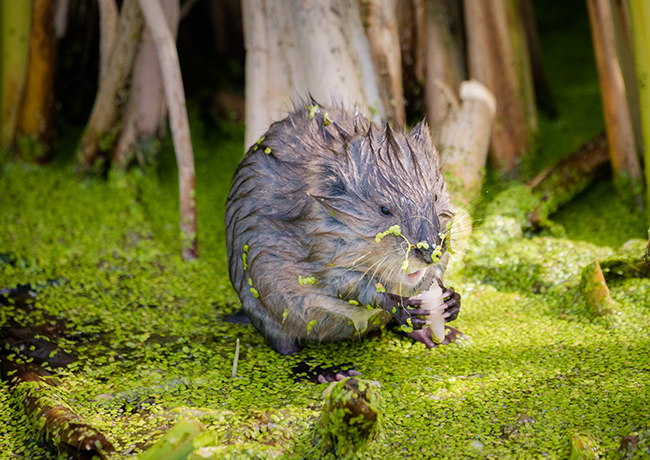
Caption: muskrat in duckweed. Photo by Tim Osborne
Birds
Numerous waterfowl live on the Sturgeon River home, including ducks, coots, terns, geese, gulls, swallows, great blue herons, grebes, red winged blackbirds and occasionally pelicans.
In addition, a number of shorebirds can be seen on the banks of the Sturgeon River, and many other songbird and raptor species live in the parks and natural areas surrounding the river. It’s not uncommon to see great horned owls and bald eagles hunting in the riparian areas and forests.
The river flows through Big Lake, which is an internationally known "Important Bird Area" that provides habitat for thousands of migratory birds every year.
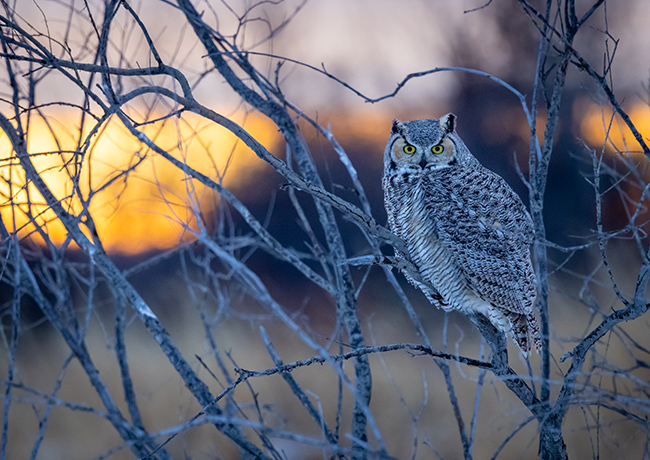
Caption: Owl in a tree. Photo by Tim Osborne
Fish
Unfortunately, the Sturgeon River is no longer home to its namesake fish species. Other fish can be found in the river, including minnows, northern pike, white sucker and occasionally walleye and goldeye.
While the waters of the Sturgeon River are normally hospitable to fish, low levels of dissolved oxygen in the summer and winter can cause fish die-offs. In summer, warm waters hold less oxygen than cooler waters. In winter, oxygen is depleted in the water through plant respiration (and subsequent release of CO2) during long winter nights, and decomposition of plant and algal matter.
Leaving beaver dams in place ensures there are pools of deeper water where fish can find refuge in the hot summer months. Minimizing the use of fertilizers and cleaning up after pets can reduce the amount of nutrients that flow from the land and into the river.
If a fish kill die-off does occur, City staff checks for signs of low oxygen as well as activities in the area to ensure it was not the result of a spill or other activity in the immediate area. Public Operations then cleans up the dead fish to prevent decomposition and odor.
Insects
Dragonfly nymphs, mites, mayflies, mosquito larvae, damselflies, water striders, midges, snails, leeches, water boatmen and backswimmers live on and in the waters of the Sturgeon River.
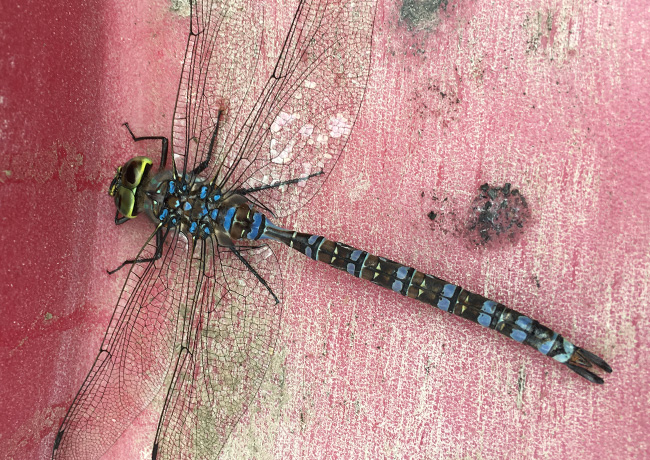
Caption: dragonfly.
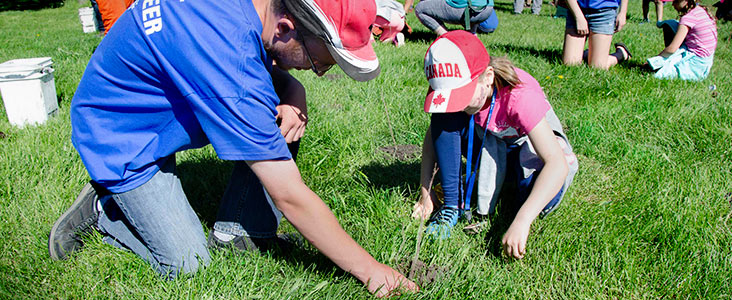
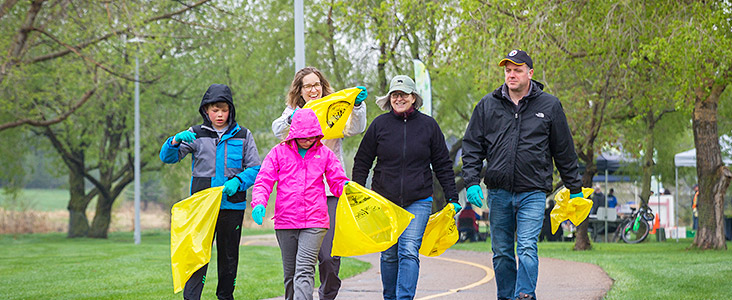
You can help improve the habitat of the many animals that live in, on and around the Sturgeon River. At the city’s Clean and Green RiverFest, happening on Saturday, September 23, you can help by collecting litter before it enters the river and plant native trees and shrubs. There will also be an Environment Fair at RiverFest, with live music and fun activities for all ages.
You can learn more about the natural state of the Sturgeon River at stalbert.ca/sturgeon-river
Photo credit note: top banner photo by Tim Osborne
Want to stay informed?
Receive weekly updates by subscribing to City Highlights
Related Pages

Last edited: September 13, 2023