
Our History
Celebrating St. Albert History
St. Albert celebrates a rich history.
The establishment of the Oblate Mission was previously referred to as "Founder's Day." We acknowledge that our community's roots go even further back, including the presence of First Nations and Métis Peoples before these events, and St. Albert continues to grow with the contributions of others.
Indigenous culture has always existed and is inextricably woven into memory, culture, place and practice, and that people from all walks of life and from every community contribute to the rich cultural heritage of the community.
St. Albert is the oldest, non-fortified community in Alberta and was the largest agricultural settlement west of Winnipeg.
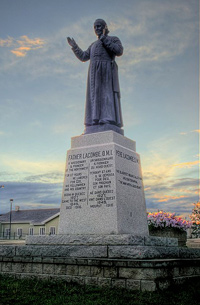
Father Lacombe arrived in St. Albert in 1861 and as one of the earliest missionaries in the West, proclaimed Mission Hill home to the St. Albert mission settlement. He built a log chapel for ministering to the Cree and Métis. Father Lacombe Chapel, the oldest building in Alberta, is now a Provincial Heritage Site and has been restored to its original appearance. It is located on the north hill of the river and is open to tours from June to September.
St. Albert was incorporated as a village in 1899 followed by town status in 1904. St. Albert officially became a city in 1977.
Today, St. Albert is a bustling city with over 73,110 residents. With more than 99 kilometres of trails, 1,100 acres of green space, the Arden Theatre, the visual arts studios, the Musée Héritage Museum and numerous special events - it's easy to see why St. Albert is renowned for its rich heritage, artistic community, and natural environment.
Learn more about the city's history
Black Robe's Vision: A History of St. Albert & District
Top Photo: Jeff WallaceRelated Pages





Last edited: October 23, 2025